Category: pleasure of knowledge

1

5 Common Myths about the Brain

MYTH HUMANS USE ONLY 10 PERCENT OF THEIR BRAIN FACT The 10 percent myth (sometimes elevated to 20) is mere urban legend, one perpetrated by the plot of the 2011 movie Limitless, which pivoted around a wonder drug that endowed the protagonist with prodigious memory and analytical powers....

0

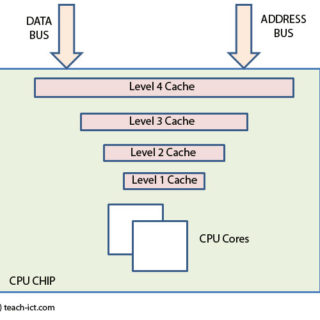
Understanding CPU caching and performance=Re-posted from ars technica

Caching is one of the most important concepts in computer systems. Understanding how caching works is the key to understanding system performance on all levels. On a PC, caching is everywhere. We’ll focus our attention here on CPU-related cache issues; specifically, how code and data are cached for...

0

Zero days – Security leaks for sale (quest Sunday special)

The threat of compromised cyber security has become our planet’s new weapon of mass destruction. The documentary Zero Days explores the growing concern that the disintegration of online safety has set the stage for potential physical dangers as well. “Our entire power supply can be cut off,” a...

0

Cyberbullies: A Killer Network(quest weekend special)

Social media sites such as Facebook, Twitter and Instagram make it possible for us to feel more globally connected than ever before. But for some, these platforms also represent a vicious breeding ground for the modern bully. Online taunts and shaming practices have resulted in an unprecedented number...

0

Wordplay& Brain-Your Pun-Divided Attention

Your Pun-Divided Attention: How the Brain Processes Wordplay To understand puns, the left and right brain hemispheres have to work together Puns are divisive in comedy. Critics groan that they are the “lowest form of wit,” a quote attributed to various writers. Others—including Shakespeare—pun with abandon. The brain...

0

Celebrates the 340th anniversary of Olaus Roemer’s determination of the speed of light.

Romer’s determination of the speed of light was the demonstration in 1676 that light has a finite speed, and so does not travel instantaneously. The discovery is usually attributed to Danish astronomer Ole Rømer (1644–1710), who was working at the Royal Observatory in Paris at the time. By timing...

1

Tuesday with Bill-How Will Quantum Mechanics Change the World?’

  Tom: Hi, Bill. Tom, from Western Australia. If quantum entanglement or quantum spookiness can allow us to transmit information instantaneously, that is faster than the speed of light, how do you think this could, dare I say it, change the world? Bill Nye: Tom, I love you...