Roots of denial of scientific facts-
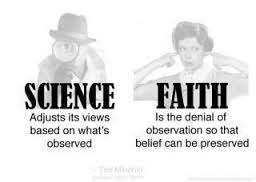
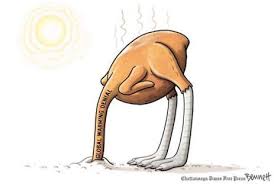
Science is the best way to dig out the truth of the natural world, but that doesn’t prevent many people from denying truths that are inconvenient or contrary to their preconceptions or faith.
In the last month, denial of global warming has subsided in the wake of a string of floods, droughts and heat waves, culminating in the “summer in March,” 2012. Although Americans’ attitudes toward warming ebb and flow, on April 17, a Yale University poll reported that 69 percent think global warming is affecting the weather in the United States.
In the same month, however, a Discovery Channel series called “Frozen Planet” attracted ire when scientists noted that it documented massive melting at the poles, but ignored the “why?” question. Scientists have said for decades that polar warming would be an early sign of global warming.
In the recent past, this phenomenon of “denialism” has also appeared in doubts about issues that have long been settled in the scientific community, such as whether:
HIV causes AIDS;
 plants and animals evolve through natural selection;
vaccines prevent disease or cause autism;
refrigerant chemicals destroy the protective ozone layer; and even
whether smoking causes lung disease.
An April conference at the University of Wisconsin-Madison delved into the origin and development of denialism. Is a refusal to face facts growing more common? Are there better ways to explain how the world works?
Denial in the brain
Scientists, by training, are professional skeptics, but if after decades of debate 97 percent of them accept the link between greenhouse gases and global warming, why are so many unconvinced? “The theory is that if we tell people what we know, they will change,” says Arthur Lupia, a professor of political science at the University of Michigan, but that ignores how people really listen and make decisions.
Speaking to a high-level gathering of science journalists in Madison, Lupia said the problem does not reside with the audience. “The problem is us. Our expectations aren’t consistent with how humans react to information, what they will listen to, or what they will remember. People don’t pay attention, or they don’t remember what we said or what we intend them to remember.”
To change an opinion, you must first attract and then hold the audience’s attention, but attention wanders all the time. No matter how important you think your message is, Lupia says, “Biology does not change its rules … about when people will think about things that challenge them. … If I am saying something abstract, that does not connect to your core aspirations,” you may be more interested in counting tiles on the ceiling.
Can you hear me now?
To communicate with a general audience, Lupia says, “You have to make it close, concrete, immediate. I understand the joy of telling the whole story about climate, but there are some audiences that can’t handle it; in their reality, it’s not the most immediate thing. They might be more receptive if you make the conversation about pollution, energy security or energy costs.”
Information is filtered by attention and ideology, Lupia concludes. “Learning is always an away game. All the real action occurs in the audience’s heads,” he says.
Reasoning: Logical or “motivated”?
Ideally, science adheres to logical reasoning: the conclusion must be true if the premises are true. Read the full story here
But remember:
“We ignore the facts of nature at our peril,” says Oreskes. “Ignoring them is not going to make them go away.”
— David J. Tenenbaum


Comment Category: Are genius born or made?
We can be taught to follow the uncommon path to be a genius. as an education institute we can put students in to situations or pathways that can force them to highlight thier creative side.
Comments Category::—Tuesday with Bill
Very interesting Question again for Bill.!!! And again he defended the answer by his favorite theory “”The evolution “”…I agree with his saying that not only our physical evolution but our thought evolution also tool place with time and this includes the humanity and ethical thinking also…what we think right today may be wrong for future generations! who knows?…Means its all about how well we co ordinate within human tribe and with other species on earth… My take on this is these definition of humanity and ethics may change as a result of evolution….
Comments Category::—RSA Animate—How To Help Every Child Fulfill Their Potential
very well said,less personal environment in schools is one of the main drawbacks in achieving the growth mindsets ….and if we go by the statistics shown in the video the number of students with fixed mindsets is higher than the ones with growth mindsets. very well explained the rules of both fixed and growth mindsets….as a teacher and parents praising the children for what abilities they have, can be one solution…